

Window or Aisle?
A window into how interesting people travel—their rituals, discoveries, insights, pet hates and occasional wrong turns.
Mark Bowden
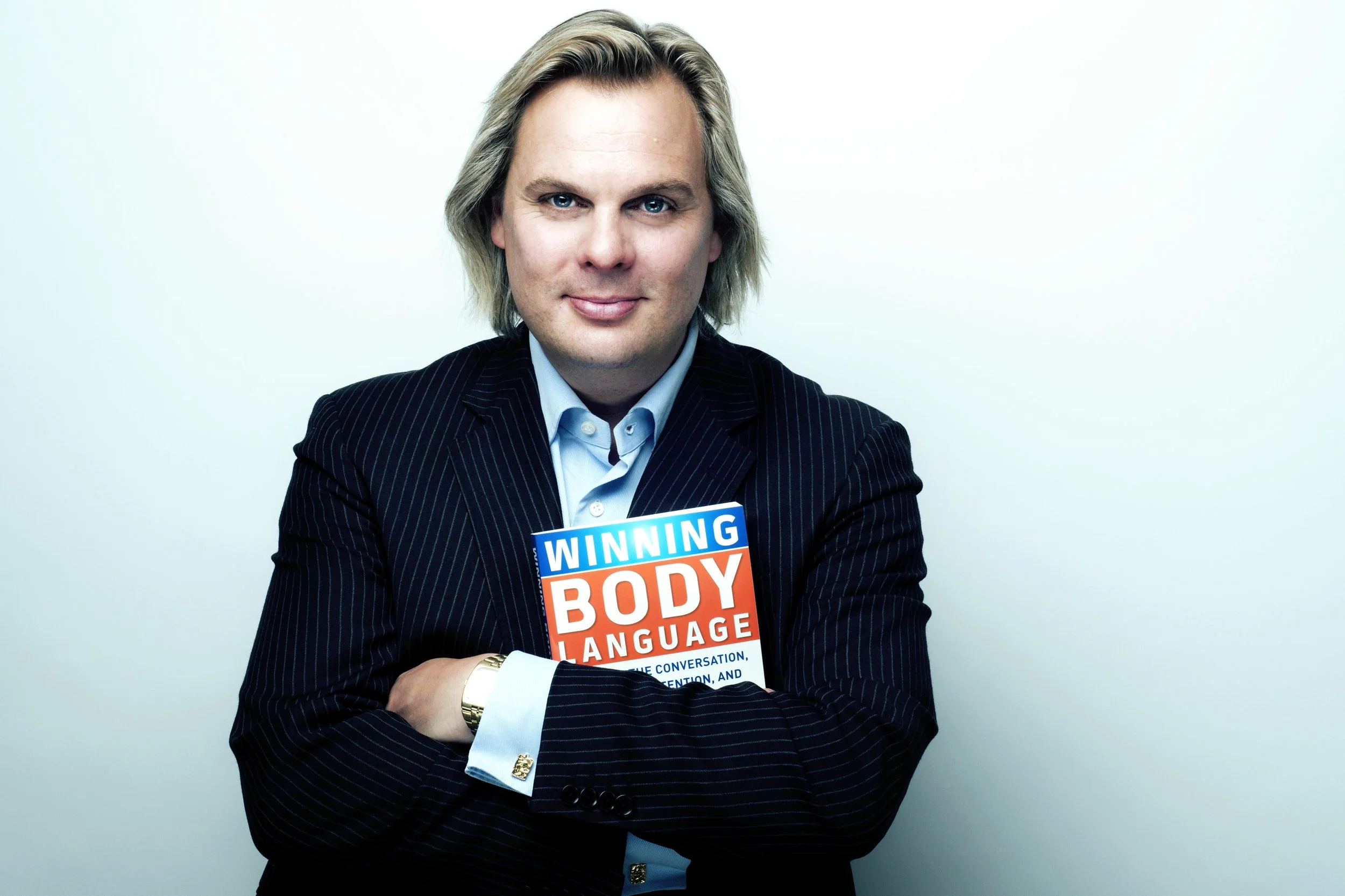
Mark Bowden is a world-renowned expert in human behavior and nonverbal communication, voted the #1 Body Language Professional in the world and #1 Communication Keynote Speaker for 2026 by Global Gurus. Creator of the GesturePlane system and founder of TRUTHPLANE®, Mark trains international business leaders, G7 prime ministers, and organizations like Zoom, Toyota, and KPMG. He is the bestselling author of four books, including Winning Body Language and Truth & Lies, co-host of the hit YouTube show The Behavior Panel (1.2M+ subscribers), and an instructor for the top-ranked EMBA program at the Kellogg-Schulich School of Business. His viral TEDx talk, "The Importance of Being In-Authentic," has reached tens of millions worldwide.
Window or aisle? And once you’re settled in, can you switch off the behavioural expert in you, or do the passengers around you inevitably provide too much material?
Aisle—specifically seat 2C, every time. In fact, that’s where I’m typing these answers right now! Despite what people might expect, I keep to myself on flights. I’m happy to help fellow passengers lift their bags into the overhead bins, but once I’m seated, I put my head down and get straight to work. Unless I’m chatting with the cabin crew, the behavioral expert is firmly off duty.
Is there an airport that you would gladly never travel through again, and if so, why?
The old LaGuardia in New York—easily the pit of hell, and I hope we never see its like again. It was arguably the worst airport on the planet, and I always felt for anyone whose very first impression of America was landing there. The transformation is astonishing, though. The first time I stepped into the new LaGuardia, I genuinely thought I’d gotten on the wrong flight.
If you could permanently eliminate one minor irritation from air travel, what would it be?
I’m not sure eliminating one minor detail changes the picture. When you travel as often as I do, you realize air travel is simply a necessary evil to get you where you need to be. As I always say, first class is just a better standard of misery. The real secret to constant travel isn’t hoping for perfection—it’s choosing to be the calmest person in the airport and getting there with the least possible damage..
What’s the smallest detail a hotel can get right that makes a disproportionately good impression on you?
I judge a hotel by how they serve a dry martini. If they can master arguably the simplest cocktail on the planet, they’ll handle everything else well. I order a “Vodka Martini, very dry, very cold, with a twist.” It really comes down to two crucial details: is it freezing cold, and is the glass filled to the absolute brim? If a hotel bar chooses oversized glassware to look generous, they need to fill it to the very top, regardless of their margin on the drink. Nothing looks worse than a half-full martini glass.
Has anyone sitting beside you on a flight ever discovered what you do for a living and immediately become very self-conscious about their body language?
I do get recognized quite often. (If you’re ever walking down the aisle past seat 2C, just look down—if you see red socks with red laces in the shoes, that’s me!) When a seatmate realizes who I am, they usually get playfully self-conscious about their body language and ask if I’m decoding them. I always put them at their ease immediately: “Don’t worry, I’m not at work right now.”.
Your TEDx talk famously challenges the idea that we should always “be ourselves.” When we travel, should we sometimes deliberately adapt our behaviour to fit the culture we’re visiting rather than insisting on being authentically ourselves?
Without a doubt. Travel relies on behavioral adaptation. Airport environments are engineered specifically to suppress the rowdy, uncompliant parts of ourselves. History shows that if everyone insists on unleashing their raw, unmanaged ‘authentic’ selves while traveling, everything goes to hell very quickly.
Why can a cancelled flight make someone direct enormous anger towards the person behind the desk who clearly didn’t cancel it, and what can that member of staff do to prevent the situation escalating?
Anger can often seek the nearest human target, but the standard advice to ‘show empathy’ can actually backfire. If staff join the passenger’s emotional frequency, the situation usually escalates. The goal is acceptance, not alignment. Staff should maintain calm, assertive, and open body language—appearing accessible without taking on the rage. Acknowledge their situation, trust the process, and move them calmly along to the next step.
A business traveller might step off an overnight flight, arrive at a meeting exhausted and immediately be expected to project confidence and credibility. Can body language help compensate when we’re not feeling at our best?
Of course. If you adopt the physical behaviors of being calm, assertive, and collected, your internal state can often quickly follow suit. People often criticize 'fake it till you make it,' but it’s actually how we operate every day. Look at how we go to sleep: we lie down, close our eyes, and pretend to be asleep until we actually are. Body language works the exact same way—inhabit the posture, and the mindset follows..
Which reveals more about somebody: how they behave towards the CEO they’re meeting, or how they behave towards the person serving them coffee beforehand?
How they treat the person serving them, without question. I once arrived for an interview linked to a high-profile role advising a Prime Minister. Someone at reception offered me tea, and I accepted—adding, “Only if you're having one too.” We sat in the foyer, drinking tea and chatting, until they casually introduced themselves as the CEO! How you treat support staff reveals your unvarnished character when you think you aren't being judged. Besides, smart leaders always ask receptionists how candidates behaved before the meeting started.
Can the physical environment of a meeting — where people sit, the shape of the table, distance between participants — genuinely influence the interaction?
It has a massive impact. Geometry shapes dynamics. Sitting directly face-to-face across a table naturally creates an antagonistic position, making confrontation far more likely. But if you shift 90 degrees to sit adjacent to someone—a complementary position—the interaction immediately becomes more collaborative. Seating alone won't solve every disagreement, but setting the room up correctly stacks the behavioral odds in your favor before anyone even speaks.
Airports and hotels increasingly replace human interaction with apps, kiosks, and automated gates. What are we gaining, and what are we losing, when travel becomes increasingly contactless?
Emotional flare-ups in travel almost always stem from friction. Technology excels at eliminating operational bottlenecks, removing physical barriers, and keeping people moving smoothly. In purely transactional tasks, human beings often unwittingly add friction. Automation isn't about eliminating jobs; it's about redeploying staff away from routine kiosks and into roles where human empathy and problem-solving reduce friction better than any system ever could.
With video meetings now so effective and familiar, businesses increasingly have to justify the time, cost, and environmental impact of travelling to meet face-to-face. From a human behaviour perspective, when does being physically in the same room genuinely make a difference?
In an era dominated by AI and synthetic content, it’s getting harder to distinguish what’s real from what isn't. That makes physical presence the ultimate premium experience. Being in the same room provides instant proof of authenticity: you know the person in front of you is real, their attention is unfeigned, and their responses are genuine. Digital channels can be engineered, but in-person presence can’t.
If every reader could take just one body language technique from this interview and try it on their next journey, what would you want it to be, and why?
Control your breath. It’s the simplest, most universal technique we have. The moment travel stress kicks in, focus on slowing your breathing down and pulling it deep into your abdomen rather than letting it sit shallow and high in your chest. Regulating your breath resets your physiological state, keeping you grounded no matter how chaotic the airport gets.
Further information
To discover more about Mark Bowden’s work in human behaviour, body language and nonverbal communication, visit TRUTHPLANE®.
You can also watch Mark as co-host of the YouTube show The Behavior Panel, and explore his bestselling book Winning Body Language.