

Window or Aisle?
A window into how interesting people travel—their rituals, discoveries, pet hates and occasional wrong turns.
Niall Downey
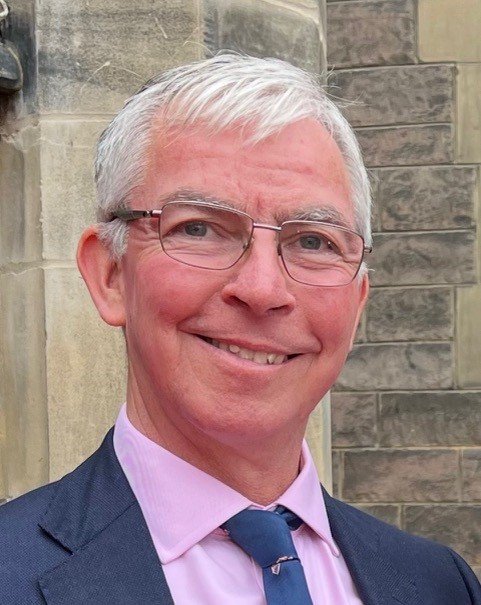
Niall Downey FRCSI is a doctor, former surgeon, retired Aer Lingus captain, author and specialist in human factors and organisational safety. A graduate of Trinity College Dublin, he trained in surgery in Belfast and was awarded his FRCSI in 1997. His medical career included cardiothoracic surgery at the Royal Victoria Hospital and registrar appointments at the Mater Hospital, Mater Private Hospital and Our Lady’s Children’s Hospital, Crumlin. In 1999, Niall retrained as an airline pilot while continuing to work as an Accident and Emergency doctor for a further six years. He subsequently flew European and transatlantic routes, becoming a captain in 2010 and completing a 27-year career with Aer Lingus, including three years operating the Airbus A330 transatlantic fleet from Manchester.
In 2011, Niall founded Frameworkhealth, now Framework Safety Group, to apply the principles of aviation safety management and human factors across healthcare and other industries. His work promotes a Just Culture and helps organisations understand how systems, culture and human limitations combine to influence safety and performance. A highly experienced national and international speaker, Niall has contributed to specialist journals and publications including The Irish Times, and has appeared on RTÉ Television News, Virgin Media and BBC Radio. Following his TEDx talk at Stormont’s Great Hall, he was appointed an Expert Adviser to the Northern Ireland Executive’s Department of Health in 2016. His first book, Oops! Why Things Go Wrong, was published in 2023 and went into a second print run. Niall also competed as a cyclist at national and international pro-am level, was selected for Northern Ireland’s Commonwealth Games panel, served as a medical officer to Irish and Ulster cycling organisations, and worked internationally as a race doctor for six years.
Window or aisle, and has being a pilot influenced your choice?
Aisle. Pilots generally like to be in control, and being at the window feels like being trapped! The ideal solution, of course, is a Premier “throne” seat, giving you the best of both worlds. Many Premier cabins are designed to give direct aisle access to as many passengers as possible.
Away from the cockpit, do you plan every stage of a journey carefully or leave room for spontaneity?
I tend to plan every stage carefully, with a back-up plan for if or when it goes wrong. I’m no craic when I’m travelling! See my answer above!
Is there one item in your hand luggage that has repeatedly proved its worth?
A travel multi-adaptor plug, allowing me to charge all my devices wherever I end up.
Do you have an airport ritual that helps put you in the right frame of mind for a journey?
I get there early, so I start the journey feeling less stressed.
When travelling as a passenger, can you genuinely switch off - or do your years in aviation make that impossible?
Yes. When I’m sitting back in the cabin, there’s very little I can influence, so I let the professionals do their job. Control the controllables and step away from the rest.
Hotel breakfast or a local café?
A local café. When you spend two or three nights a week in hotels, it’s refreshing to get out and about and avoid going stir-crazy.
Is there a destination you would happily revisit tomorrow?
Chicago was my favourite destination. There were plenty of cafés, shops — not that I’m much of a shopper — and parks to keep me entertained all year round. In summer, the beach and boardwalk were only a few minutes’ walk away too. It offered the best of both worlds.
Has a travel mishap ever felt disastrous at the time but become a good story afterwards?
One mishap, although not disastrous, was having to shut down an engine on an A330 and divert to Montreal — only to shut down the same engine again the following day, with the same passengers, and divert to Denver.
What advice would you give someone who feels particularly anxious about flying?
Anxiety is generally an emotional response rather than a rational one, so explanations only go so far. When asked, I focus on how much redundancy we build into our systems, training and strategic planning, so that no matter how much goes wrong, there is always a back-up plan to land safely somewhere. Since we’ve worried about all that, you don’t need to.
What do business travellers commonly underestimate about fatigue after an early flight, late arrival or poor night’s sleep?
Travellers often underestimate the cumulative effect of fatigue. The travel industry needs to do more work on this for its crews too, as workloads continue to be pushed to the limits of what is legal, but not necessarily sensible or sustainable.
What preparation habit has served you well in surgery, aviation and competitive cycling?
Always have a Plan B. Errors and mishaps are inevitable; the outcome depends on how they are handled.
What can business travellers learn from Threat and Error Management about preventing small problems from becoming bigger ones?
Threat and Error Management, and Human Factors more generally, are increasingly recognised as a high-performance advantage for businesses, especially as workloads are pushed to more extreme levels. Much of the friction can be engineered out, freeing up mental bandwidth for staff and executives and leading to better outcomes, improved staff satisfaction and retention as well as higher profits.
Further information
To learn more about Niall and his work, visit Framework Safety. For corporate speaking enquiries, visit Niall’s profile at The Closer Speakers’ Consultancy.