

Window or Aisle?
A window into how interesting people travel—their rituals, discoveries, pet hates and occasional wrong turns.
Simon Anholt
Simon Anholt is widely regarded as the world’s leading authority on the images and identities of countries, cities and regions.
He originally coined the term “nation brand” in a 1998 paper.
He served for nine years as Vice-Chair of the UK Foreign Office’s Public Diplomacy Board, responsible for managing the image and ‘soft power’ of the United Kingdom.
Anholt has published six books about countries, their images and their role in the world. His latest book, The Good Country Equation, was described by Zeid Ra’ad Al Hussein, the former U.N. High Commissioner for Human Rights, as “a masterpiece”.
Anholt’s TED talk Which country does the most good for the world? is the all-time most viewed TED talk on Governance, with over 12 million views on TED.com and YouTube.
He was awarded the 2009 Nobels Colloquia Prize by a committee of 20 Nobel Prize-winning economists for his contribution to the fields of international relations and economic development.
His work has been cited 18,464 times according to Google Scholar, making him by far the most-cited author in the fields of place branding and public diplomacy.
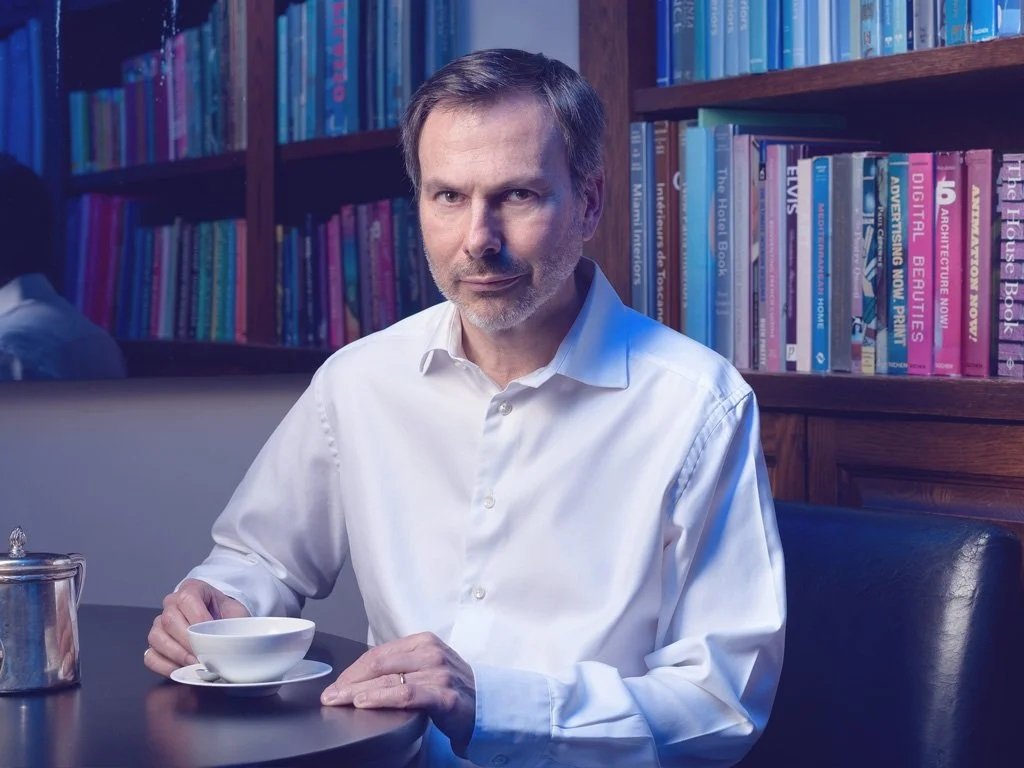
Window or Aisle, and does the opportunity to see the landscape below (weather permitting) ever influence your choice?
Neither, preferably. I detest flying, and despite having flown 2 million miles in the last forty years, all I care about is having my feet firmly on the landscape below, not thousands of metres above it.
Do you enjoy airports, tolerate them, or regard them as something simply to be endured?
I love arrival airports because they’re where the flight ends. I hate departure airports because they’re where the flight begins.
When you arrive somewhere you’ve never visited before, what is the first thing you instinctively notice?
Words, words, words. Advertising, airport signage, road signs, shop displays: the moment I see a word, or a scrap of a word, in another language. I’m working away trying to understand how it’s formed and what it might mean.
Of all the places your work has taken you, which location has surprised you the most?
Afghanistan. So friendly and so breathtakingly beautiful.
You’ve argued that countries cannot simply market their way to a better reputation. Does that mean tourism advertising has less influence over where we travel than tourism authorities would like to believe?
I haven’t found that advertising can do much to change people’s perceptions of countries, but it is quite effective at selling holidays (when it’s well done and properly funded).
What do tourists misunderstand most about the idea of “authenticity”?
Such a dodgy word. The moment you say it, you’re flirting with mendacity — or at least with superficiality. It’s like “honesty”: if you feel you have to name it, something’s not quite right.
Business travellers often spend time with local colleagues, clients, and suppliers rather than other tourists. Could that actually give them a more authentic insight into a country than the average leisure visitor receives?
Definitely. Because 99% of my foreign travel has been business travel, I think I’ve learned far more about the places I’ve been than I would have done if I’d only been on holiday.
If you could give every international business traveller one piece of advice before they arrive in a country they’ve never visited before, what would it be?
Learn to say at least five sentences of the language (and learn to recognise some of the most likely replies). You’ll be off to a flying start.
The moment we travel abroad, do we become, whether we like it or not, unofficial ambassadors for our own country?
Yes, assuming people know where we’re from. A single encounter with a single individual can change your view of their country for the rest of your life.
Is simply spending money in a destination enough to say that we’re contributing positively to its economy, or should we think more carefully about who ultimately receives that money?
Easier said than done, most of the time — but the biggest expense is likely to be the hotel, and if it’s an international brand, it’s likely that less of our spend will end up in the local economy.
Is there such a thing as a “good traveller”? If so, what does one look like?
Yes. Quiet, courteous, tidy, careful, friendly, and someone who has taken the trouble to learn something of the country before visiting it. And maybe read a couple of books — not guide books, but the literature or poetry of the country.
Which country would you most like everyone to visit once, not because it’s necessarily the most beautiful, but because you think experiencing it might change the way they see the world?
It’s hard to generalise because it depends entirely on where you come from: but if you’re from a poor country, anywhere that has around 200 times the GDP (in purchasing power parity) of your own country, or around 200 times less if you’re from a rich country. If you come from somewhere in the middle, the multiple is going to be closer to 10-15 times richer or poorer, but as big as you can find. Money isn’t everything, but it is responsible for a large part of the most visible differences between countries.
Further information
To learn more about Simon and his work, visit Anholt & Co. You can also explore the Good Country Index, founded by Simon to examine what countries contribute to the world beyond their own borders.